
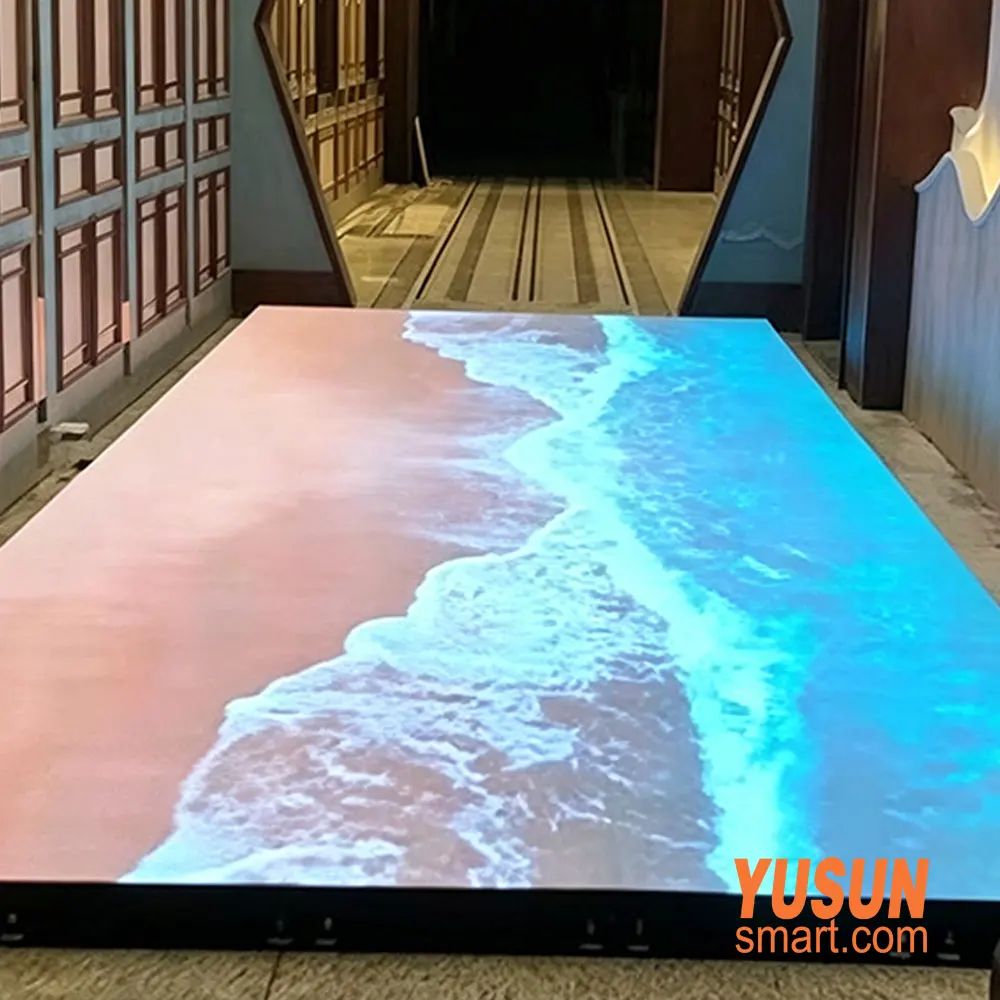
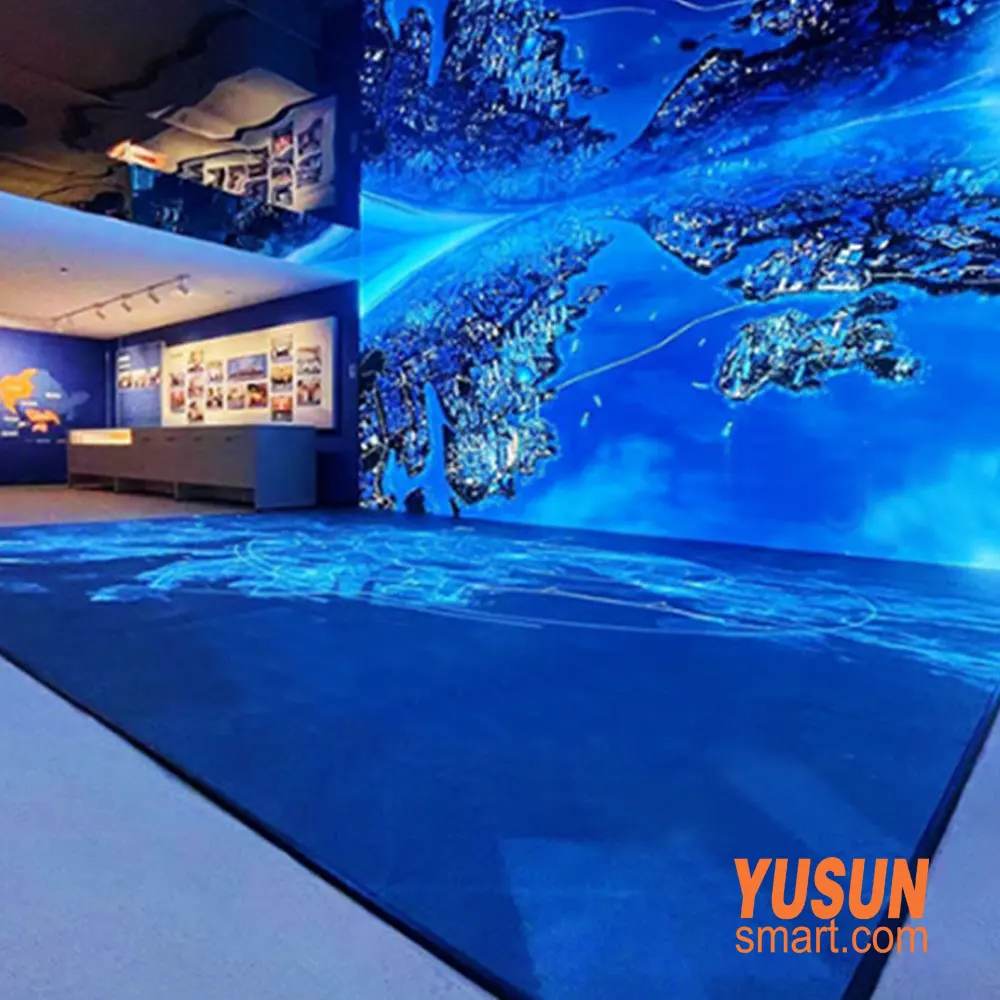
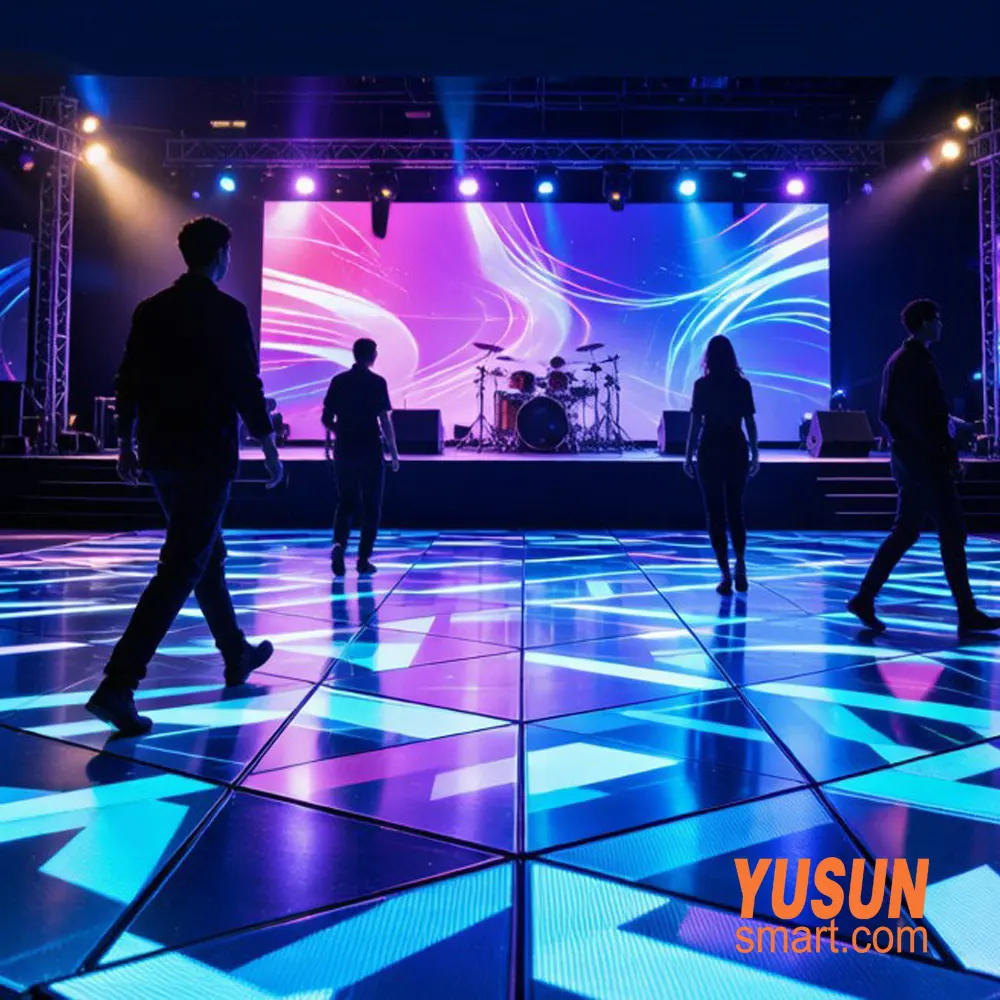
Interactive LED floor tile screens are widely used in shopping malls, exhibition halls, museums, and stage event projects. Currently, two mainstream interactive solutions dominate the commercial market: overhead TOF radar induction and built-in capacitive induction. Although both realize human-screen interactive lighting effects, their working principles, structural designs, stability, service life, and later maintenance costs are completely different. Choosing the right interactive solution directly determines project stability and long-term operating benefits.
Working Principle Differences
Overhead Radar Interactive Solution
The radar interactive system adopts separated induction and display structure. No sensors, induction chips or sensitive components are built inside the LED floor cabinet. The TOF LiDAR radar is installed on the ceiling above the screen area, scanning the ground in real time through high-frequency radar waves. When pedestrians enter the induction area, the radar captures position tracks and transmits signals to the control system to trigger dynamic LED effects.
The entire floor screen only undertakes display and load-bearing tasks, realizing non-contact human-body induction with a maximum scanning radius of 10 meters and stable multi-person simultaneous recognition.
Built-in Capacitive Interactive Solution
The capacitive interactive floor tile screen integrates capacitive induction sensors inside each cabinet module. It relies on the human body’s electrostatic induction to detect foot contact and position changes. When pedestrians step on the screen surface, the capacitor value changes instantly, and the system feeds back signals to trigger interactive effects.
Since the sensors are embedded inside the screen body, the induction components work under long-term pressure, heat and dust erosion, which leads to natural aging and rising failure rate over time.
Core Performance & Structural Comparison Table
| Comparison Item | Overhead Radar Type | Capacitive Induction Type |
| Induction Structure | External ceiling-mounted radar, no built-in sensors | Built-in capacitive sensors inside each tile |
| Working Mode | Non-contact real-time scanning | Contact foot stepping induction |
| Response Delay | <150ms ultra-low latency | 150–300ms regular delay |
| Multi-person Recognition | Support unlimited multi-person tracking | Limited recognition range, easy cross-interference |
| Cabinet Failure Rate | Extremely low (no vulnerable internal sensors) | Higher (sensor aging & damage) |
| Maintenance Difficulty | Simple, screen body maintenance-free | Complex, requires sensor replacement |
| Service Life Stability | Long-term stable operation | Performance declines after long trampling |
| Affected Factors | Slightly affected by strong ambient light | Affected by temperature, humidity and dust |
Advantages & Disadvantages Analysis
Overhead Radar Interactive Floor Screen
Advantages: The biggest advantage isseparation of sensing and display. The cabinet has no vulnerable induction parts, fundamentally avoiding sensor damage caused by long-term pedestrian trampling, heat accumulation and dust. It supports wide-range multi-person interaction with ultra-low latency, stable effect and almost zero later maintenance cost. The whole machine maintains consistent performance for long-term commercial operation.
Limitations: Ceiling installation space is required for radar equipment; strong highlight and complex reflection environments will slightly interfere with radar scanning accuracy.
Capacitive Interactive Floor Screen
Advantages: Independent of ceiling equipment, no need for overhead wiring and installation. The overall project construction process is simple for temporary short-term use.
Limitations: Built-in capacitive sensors are wearable and vulnerable parts. Long-term frequent trampling will cause sensor aging, drift and failure. Once the induction module is damaged, the whole cabinet needs maintenance or replacement, resulting in high after-sales cost and unstable later interactive effect.
Applicable Project Scenarios
Choose Radar Interactive Solution For:
- Long-term fixed commercial projects: shopping malls, brand exhibition halls, museums, art galleries
- High pedestrian flow and long operating hours scenarios
- Projects requiring stable multi-person interactive effects and low maintenance rate
Choose Capacitive Interactive Solution For:
- Short-term temporary events, roadshows and temporary stage displays
- No ceiling installation conditions and one-time use projects
- Low-budget and short-cycle display demands
Conclusion: Which Solution Is Better?
For commercial fixed installation and long-term operation projects, overhead radar interactive LED floor tile screen is the more reliable and cost-effective solution. It solves the core pain points of traditional capacitive screens such as easy aging, high failure rate and difficult maintenance. For temporary event projects with low durability requirements, the capacitive solution can meet basic interactive display needs with simpler construction.
Disclaimer: All technical comparisons and project suggestions are for reference only. YUSUN SMART reserves the right to update product solutions and technical standards without prior notice according to industry iteration and project requirements.